
Raj Persaud is a psychiatrist and author of The Mental Vaccine for COVID-19.
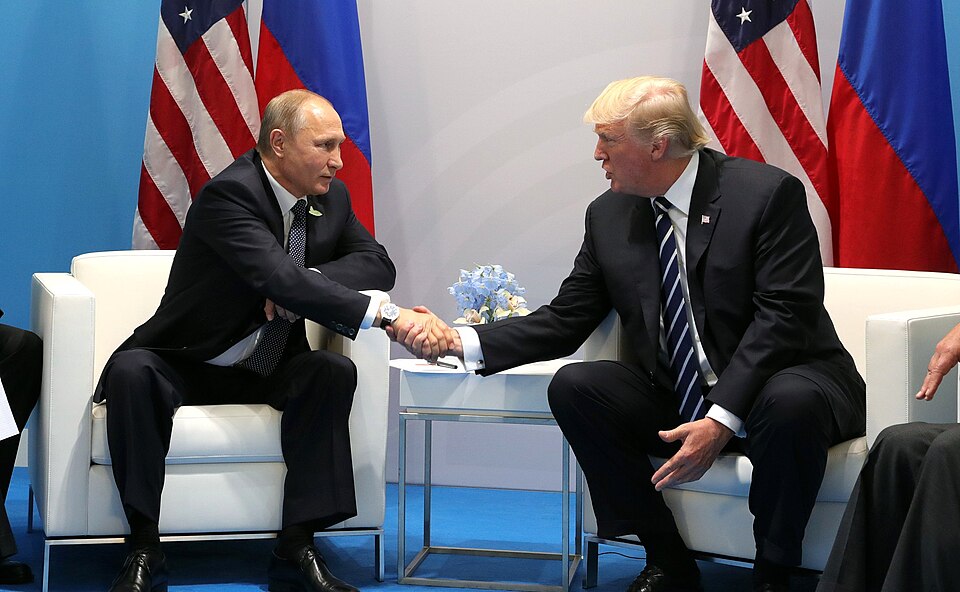
Ahead of his Friday summit with Russian President Vladimir Putin in Alaska, US President Donald Trump expressed optimism about the opportunity for normalizing trade between both countries, and declared, somewhat grandly, that he will know within the first two minutes of their meeting whether a deal can be struck.
“We are going to have a meeting with Vladimir Putin. And at the end of that meeting, probably in the first two minutes, I will know exactly whether or not a deal can be made,” he said. But is that true – or does it in fact reveal something about Trump’s negotiating style?
In fact, given skilled and experienced negotiators understand that keeping the cards they hold close to their chest, and not revealing too much before an encounter with the adversary, does Trump’s habit of spewing out a stream of consciousness at all times, in fact place him automatically at a disadvantage?
In revealing that he will be able to tell in the first two minutes of a meeting whether there is a deal to be done, has he already given Putin a trump card, so to speak?
Might Putin now use this psychologically, and appear willing to make concessions and be emollient in the first few minutes, now he knows how Trump thinks, only to ‘harden up’, later on?
But if we want to go psychologically deeper, declaring this ‘two-minute’ talent of Donald’s, might be a kind of gambit in itself, a double-bluff, as it were.
Let us give Donald Trump the courtesy of assuming he really does know what he is doing, then maybe getting Putin to be nice early on by this prior manipulation, might be to Trump’s longer-term advantage?
Certainly the research on negotiation finds that if you ask the two adversaries to just do small talk for the first few minutes, and ban discussion of the actual negotiation, at the beginning of a meeting, then it is true, a resolution is more likely to be struck.
The psychological theory here is that human needs for bonding and affection and to appear reasonable begin to surface, if you remove hard impersonal issues from the conversation at the beginning.
However, that does not mean the deal done, under these circumstances, tends to be to one party’s advantage over another.
If one side has a human need to be liked a lot more than the other, it is that side which becomes vulnerable in this predicament.
In contrast to Donald Trump, Putin has been keeping his cards close to his chest, to use a poker game analogy, and indeed, it would appear that Donald Trump has put his own reputation on the line before the two ‘big men’ meet, more than Putin has, if a deal is not done. Trump would emerge with a lot more egg on his face than Putin would. Also if there is no deal, it is Putin who will emerge more as the ‘strong man’ compared to Donald, because he would be the only world leader who appeared able to not cave or be craven in the face of the blustering Donald.
Trump in insisting that Ukraine is not present, also takes the risks of making offers that Ukraine refuses later, with more ‘egg on the face’ potential there, none of which are psychological problems that Putin faces. Being a dictator he has no one he has to go back home to and secure further agreement to any proposal.
The very fact Trump was willing to sit down with Putin in itself sends a worrying sign for the Ukrainians. After all, if Trump was truly convinced, from private intelligence he would have access to that the rest of us don’t, that Ukraine was, despite appearances, actually winning, or even that in the longer term Russia would lose, why negotiate at all?
The big problem with this Alaska encounter is that the very arrival at the table in itself signals something very significant, for the underdog, surely in this case, Russia, given that Washington would beat Moscow hands down in any stand-up-fight.
Trump has gestured at something deeply momentous in his willingness to sit down at the table with an adversary that is supposed to be much weaker militarily. He is signaling that the USA’s willingness to stand with Ukraine appears to be faltering rapidly.The very fact Zelensky was not even invited flashes alarm signals. Though the US President does appear to now be rowing back on that issue and has mentioned now the importance of a second meeting to which others will be invited.
Given the criticism this flip-flopping has attracted, Trump even starts this mediation more on the back foot in terms of his standing worldwide, than Putin does.
Being a dictator, Putin does not care about the faltering state of his economy, nor the accumulating deaths of his subjects. Indeed, dictators often need wars to keep the population distracted and on-side, by pointing at an enemy across the border, which naturally requires a ‘strong man’ to stand up to, and on whose shoulders can be heaped the blame for all the ills on our side of the border.
Trump is trying to show off using this fallacious ‘two-minute’ idea, because that is what it is, an attempt to sound impressive and knowledgeable and supremely skilled in a way ordinary mortals cannot grasp, but can only gasp in wonder at.
But no experienced negotiator in the world would actually agree with him, that you can tell in two minutes at the beginning of any deal-making, how it is all going to go.
So this negotiation, like everything Trump does, is not about solving a war, it is about how this can make the US President look good.
Trump, it would appear psychologically, is deeply sensitive to being popular and lauded, Putin, in contrast, is indifferent to such criticism. Which do you think is the more powerful approach psychologically?
The Tribune is committed to publishing a diversity of opinions. We’d like to hear from you. Send your articles to our email: opinion@merotribune.com.
Follow the Mero Tribune on Facebook and Twitter.


Advertisement
