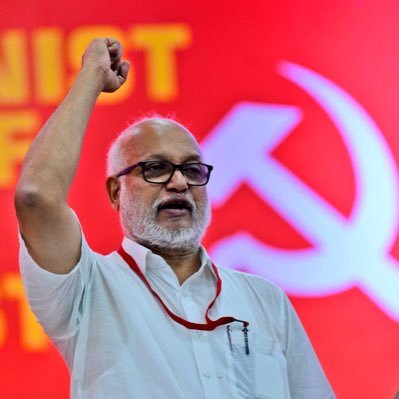
M A Baby is the General Secretary of the Communist Party of India (Marxist).
It was six years ago, on the 5th of August, 2019, that the Modi government struck a below-the-belt blow to the Indian Constitution, especially to the principles of federalism and secularism enshrined in it, by abrogating the special status of Jammu and Kashmir under Articles 370 and 35A. This was a betrayal of the assurances given by India’s then-national leadership in 1947 regarding the protection of the aspirations and identity of the people of Jammu and Kashmir, in exchange for their decision to join the Indian Union.
The CPI(M) strongly opposed the moves against J&K, terming them unconstitutional, illegal, and authoritarian. We said that it was not just an abrogation of the special status of a state, but an abrogation of democracy itself. As mandated by Article 3 of the Constitution, decisions on changing the rights or the boundaries of states have to be taken through discussions with the respective states’ legislatures. We have the examples of Andhra Pradesh, Bihar, Uttar Pradesh, and Madhya Pradesh before us. But the BJP government blatantly violated this provision in Jammu & Kashmir.
Thus, for the first time in the history of independent India, the future of the people of a state was decided without any reference to their opinion or even giving them a chance to debate and discuss their own future. It has set a dangerous precedent that a majority in the parliament can ride roughshod over the rights of states. Any state can now be dissolved and made into a virtual colony of the union government, if it has a majority in the parliament.
The delimitation of constituencies in J&K—which was conducted on the heels of the abrogation of Articles 370 and 35A—pointed to the actual game plan of the Modi government. It was to change the demographic nature of the state, beginning with a reordering of constituencies through delimitation to give more weightage to the non-Muslim areas. With the removal of the permanent resident status under Section 35A, this could be easily manipulated. However, well aware of the plans of the powers that be, the people of J&K defeated the BJP and their allies in the elections that followed the delimitation exercise.
As it has been written about much, let me not detail the excesses committed by the union government immediately after the abrogation of Articles 370 and 35A. The Modi government claimed that whatever they were doing was in the interest of Jammu & Kashmir. But, at that time, the CPI(M) had said that national integration cannot be achieved at the point of a gun or through coercion. We had warned that the country would have to pay a heavy price for measures which are not only a betrayal of the people of J&K, but also of the secular and democratic values of the country.
Just two months short of the completion of six years since J&K was robbed of its right to statehood and divided into two Union Territories, a delegation of the CPI(M) visited the region on June 10 and 11. To make an assessment of those affected by cross-border shelling in Uri, in the aftermath of Operation Sindoor, we met families in the border areas. During that visit, the ire and the disappointment of the people of Jammu and Kashmir were palpable. It was evident to us that even though six years have passed, the dismantling of Jammu and Kashmir has been widely perceived as an act of humiliation by the people there.
Even now, the people of Jammu and Kashmir are being deprived of passports and employment on various pretexts. The land laws enacted after radical land reforms, which were unique in the country, have been abolished. State subject laws have been scrapped. Domicile certificates are issued even to non-residents, allowing them to purchase land. This has severely impacted the interests and concerns of the local population.
Despite tall claims, unemployment among educated youth has reached an all-time high in the region. According to the Periodic Labour Force Survey (PLFS) data released by the Ministry of Statistics and Programme Implementation in 2024, the unemployment rate in Jammu and Kashmir was 11.8 percent, nearly double the national rate of 6.4 percent. Since the abrogation of Article 370, unemployment, inflation, and economic decline in Jammu and Kashmir have only worsened. Various taxes, such as property tax and toll tax, have been imposed or increased. The menace of drug addiction has assumed dangerous proportions, posing a severe threat to the future of the youth. It was against the backdrop of all this, that the people of J&K defeated the BJP and their allies in the elections.
Despite the drubbing in the Assembly elections, the BJP does not seem to have learnt its lesson. They are still going ahead with measures that antagonize the people of J&K. The latest in that series is the abolition of the holiday on Martyrs’ Day, which commemorates the killing of 22 Kashmiris by the Dogra Army on July 13, 1931. Omar Abdullah, the elected Chief Minister of Jammu & Kashmir, was manhandled by the police at the Naqshband Sahib graveyard in Srinagar when he had gone to pay homage to them. Various political leaders, including Mohd. Yusuf Tarigami, Central Committee member of the CPI(M) and five-time member of the J&K Assembly, was placed under house arrest and prevented from proceeding to pay homage to the martyrs. On the other hand, the birthday of the Maharaja, responsible for killing freedom fighters, was declared as a holiday.
The BJP government must stop playing with the sentiments of the people of Jammu & Kashmir. Currently, the stalemate in governance—because of the Lt. Governor bypassing the elected state government and its head, the Chief Minister, at the behest of the union government—is the most pressing issue as far as the people of J&K are concerned. During our visit, they told us that the union government is not taking into account the democratic aspirations of the people of J&K. Downgrading a state with special status into a mere UT has created deep anguish.
Under Section 36 of the J&K Reorganisation Act, any Bill or amendment involving financial obligations for the Union Territory cannot be introduced in the Legislative Assembly without the LG’s recommendation. This gives the LG effective veto power over a wide range of policy decisions, as most have financial implications. Further amendments by the Ministry of Home Affairs (MHA) have expanded the LG’s powers. The LG has gone on to hold crucial security review meetings—including those in which the Union Home Minister participated—without inviting, including, or even informing the CM.
We saw what happened in Pahalgam. The union government, with all its powers in Kashmir, could not stop a terror attack on Indian soil. However, despite their humiliation by the union government and the efforts by divisive forces to fan communal hatred in the aftermath of the terror attack in Pahalgam, the people of J&K upheld their glorious tradition of standing together against divisive tendencies.
The LG has further issued direct orders for security audits, establishment of checkpoints, night patrols, and coordination with armed forces, bypassing the CM’s office. He has even terminated government employees suspected of militant links without inquiry. Due process is ignored. Then, how can the law and the Indian Constitution be upheld in Kashmir?
When an appointed figure can toy with the elected leader, public trust in democratic processes is undermined, as it fuels a perception that elections are meaningless if the government cannot exercise real power. Such a situation will prolong political instability. It will delay normalization and reconciliation, impacting peace and development. It can even fuel resentment and strengthen separatist sentiments. In J&K itself, we have examples from the past that point to this real danger.
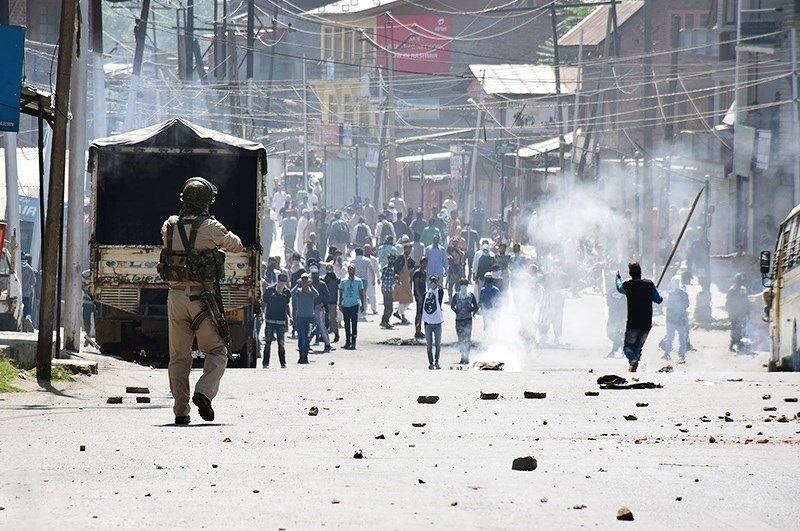
Elected governments were toppled and elections blatantly rigged time and again under central auspices, such as during the 1987 election. Kashmiris, especially in the valley, have faced the most brutal forms of repression with firings and arrests. Pellet injuries have blinded scores of young people. The largest contingent of armed forces and paramilitary forces have been stationed in the state. The draconian Armed Forces Special Powers Act (AFSPA)—which the CPI(M) has time and again demanded should be lifted in all civilian areas—was applied almost everywhere.
Integration can never be achieved through coercion and repression. It can only be achieved through dialogue. In our recently held 24th Congress, the CPI(M) demanded that full statehood should be immediately granted to Jammu & Kashmir as a step towards restoration of special status. The recent developments in J&K—especially with the LG acting undemocratically at the behest of the union government—underscore the fact that its status as a UT limits the power of the elected government there.
Therefore, learning from the experiences of J&K over the last six years, both the full statehood of Jammu & Kashmir and Articles 370 and 35A of the Indian Constitution have to be restored immediately.
The Tribune is committed to publishing a diversity of opinions. We’d like to hear from you. Send your articles to our email: opinion@merotribune.com.
Follow the Mero Tribune on Facebook and Twitter.


Advertisement
