
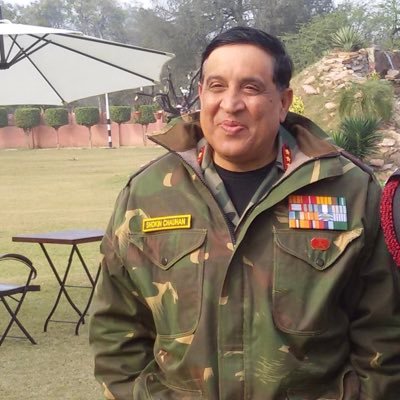
Lt Gen Shokin Chauhan (Retd) is a former Director General of Assam Rifles and former Defence Attaché to Nepal. A Visiting Fellow at the Centre for Land Warfare Studies, he writes on strategic affairs, India’s neighbourhood and national security.
Long before the modern Indian state came into being, people travelled between the Himalayan valleys and the Gangetic plains, carrying their beliefs, languages and goods. They built family and commercial ties that paid little attention to boundaries that would later become political.
This relationship does not need to be invented afresh by every generation of political leaders. It already exists in the lives of ordinary people. It is present in the pilgrim who travels to Pashupatinath, in the devotee who visits Janakpur, in the Buddhist who journeys to Lumbini, and in the family that crosses the border to attend a wedding.
None of this diminishes Nepal’s distinctive national identity. Nepal is a proud sovereign nation with its own history, political experience and aspirations. Its identity cannot, and should not, be subsumed within India’s civilisational narrative. Friendship cannot mean sameness, and proximity cannot confer ownership.
My years in Kathmandu as India’s Defence Attaché, between 2004 and 2007, and my association with the Bhu Phus, the retired Nepali-origin Gorkha soldiers of the Indian army, have convinced me that the deepest foundations of this relationship are human. Governments may negotiate agreements, but our soldiers and their continued attachment to the Indian army give the relationship its substance.

The Bhu Phu (Bhut Purv), a Nepali term for former soldiers, may have laid aside their uniforms, but their attachment to their regiments and comrades remains. In difficult terrain, where weather or an insurgent attack can change within minutes, a soldier learns to trust the comrade beside him. Every soldier is a link between two societies. His service connects the village in Nepal from which he comes to the regiment in which he serves in India, and his family carries that relationship into the next generation.

There is a lesson here for diplomacy. Trust cannot be manufactured when it is required; it must be cultivated before it is needed.
On 26 August 2026, a flood swept down the Bhote Koshi and Trishuli rivers in Nepal’s Rasuwa district. A rock-ice avalanche and the mobilisation of water and debris generated a destructive flood that travelled downstream through the Lende and Trishuli river systems. The United States Geological Survey’s preliminary assessment identified rapid slope failure involving a glacier as the likely trigger, while Nepal’s authorities and scientists continue to examine the event. For Nepal, this was a human tragedy of immense proportions, measured in lives lost, families searching for loved ones and livelihoods destroyed.
Our first response must be solidarity with the people of Nepal. But compassion must also lead to reflection. It would be premature to attribute the disaster to any single cause without sufficient evidence. Still, in the Himalayas hazards can cascade: a slope failure can mobilise ice, rock and sediment, and the resulting flood can travel through valleys with great speed.
We build roads along rivers because valleys provide the easiest routes through fragile terrain. We construct bridges at narrow crossings because connectivity is essential for people in remote villages. We develop hydropower because rivers are a source of energy and prosperity. Taken together, these choices concentrate people and infrastructure in places exposed to floods and landslides. The answer is not to abandon development, which would condemn many mountain communities to isolation. The answer is to ensure that development is informed by a deeper understanding of the landscape.
A disaster in an upstream catchment is often a larger crisis downstream, and the security of people living along these rivers depends on cooperation between the countries through which they flow. India, China and Nepal must move beyond episodic coordination towards a partnership in mountain and river-basin risk management. That means better science, including satellite imagery, river sensors and glacier monitoring, complemented by local knowledge; early warning that reaches people in time to act; infrastructure planned for floods and cascading events; and dependable procedures for sending urgent warnings across the border. Nor should every Himalayan disaster be turned into an allegation against another country. The scientific causes of an event must be established through evidence, not inferred from the location of infrastructure or the geopolitical interests of neighbouring states.
No serious discussion of India-Nepal relations can ignore the sensitivities that have strained them: differences over borders, perceptions of interference, economic dependence, and a relationship between countries of unequal size. Nepal has every right to safeguard its sovereignty and pursue an independent foreign policy. India has legitimate interests in the security and stability of its neighbourhood. India must recognise that its size creates responsibilities as well as opportunities. Friendship is strengthened when the larger country listens without condescension and recognises that Nepal’s aspirations deserve respect. Equally, Nepal’s pursuit of strategic autonomy need not be understood as a rejection of India. India does not need a Nepal that feels overshadowed by its larger neighbour. It needs a Nepal that feels respected, secure and confident in its future.
The open border is unusual in a world increasingly defined by barriers. Families have maintained relationships across it, workers have found jobs, and people have travelled for education, pilgrimage and healthcare. It also requires responsible management, since cross-border crime and human trafficking cannot be ignored. The aim must be to make the border more secure without destroying the connections that make it special.
Climate change, glacial retreat, floods and landslides are challenges that neither country can address in isolation. The same mountains that sustain our rivers can also unleash destruction. The same valleys that connect our communities can become channels of disaster. The lesson is not to fear the Himalayas, but to understand them.
We cannot alter the geography that connects us. We can choose how we respond to it. We can treat disasters as isolated tragedies, or we can learn from them and reduce the risks that future generations will face. We should not wait for the next tragedy to remind us of what geography has been telling us all along.
The Tribune is committed to publishing a diversity of opinions. We’d like to hear from you. Send your articles to our email:opinion@merotribune.com.
Follow the Mero Tribune on Facebook and Twitter.


Advertisement
